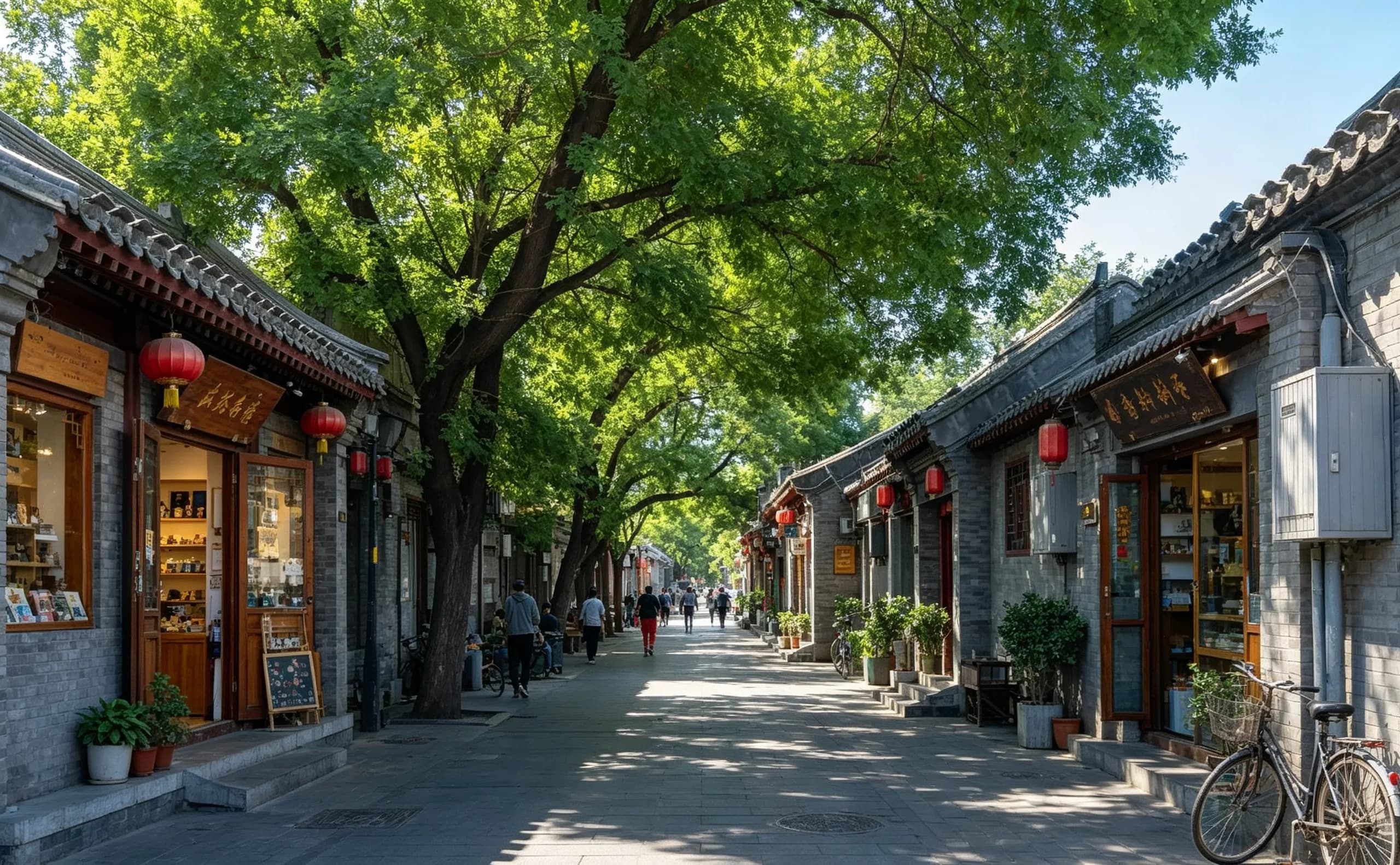
If you are visiting Beijing for the first time and want to experience the city life of "Old Beijing" within half a workday, the hutongs are a destination well worth including in your itinerary.
Compared to landmarks like the Forbidden City and the Great Wall, hutongs are closer to everyday life. Narrow lanes, gray-brick courtyard houses, old trees, neighborhood shops, cafés, and the rhythms of local life collectively shape the unique urban fabric of Beijing’s old city.Foreign tourists can learn about traditional Beijing residences, the layout of streets and alleys, and the local way of life here.
However, given the extensive distribution of Beijing's hutongs, it is best not to try to cover too much ground during a half-day tour. We invite you to read our article on "Half-Day Beijing Hutong Route" to discover the unique hutongs and attractions you can explore.
Why are the hutongs worth visiting on a first trip to Beijing?
Hutongs showcase the authentic old city of Beijing, allowing visitors to see how the historic urban areas remain an active part of modern life.
They are better suited for a leisurely pace than major tourist attractions: the Forbidden City requires a significant amount of time to explore, while visiting the Great Wall demands logistical planning and physical stamina. Hutong tours offer greater flexibility, allowing visitors to stop whenever something catches their interest.
They can be completed in half a day: if time is limited, this route is ideal because it does not require traveling across different districts of the city; the points of interest are relatively close together. With sensible time management, the tour can be completed without feeling rushed.
Recommended Half-Day Hutong Route in Beijing
If you are visiting Beijing for the first time, I do not recommend trying to "rush through" multiple hutongs during a half-day tour. The best approach is to pick a single hutong area—one that is distinctive, pleasant to explore, and offers opportunities for dining, photography, and relaxation—and simply take a leisurely stroll.
Top recommendation: The Gulou–Shichahai area. The core route covers Yandai Xiejie, Xiaoshibei Hutong, and Nanluoguxiang; the walk is leisurely and features lake views, historic towers, snacks, and cafés—making it ideal for foreign tourists.
Detailed Half-Day Itinerary
1. The Drum Tower and the Bell Tower
Start at the Drum Tower—a key landmark in the northern part of Beijing’s old city and close to the traditional central axis.
Even without climbing the tower, you can view the architecture, the square, and the entrances to the surrounding hutongs from the outside.
What to see:
Exterior architecture of the Drum Tower and Bell Tower
Beijing's traditional central axis
Layout of the old city's streets and alleys
Recommended duration of visit:30–45 minutes
2. Yandai Xiejie (Hutong)
It takes about 5 to 10 minutes to walk from the Drum Tower to Yandai Xiejie (Skewed Tobacco Pouch Street).
This is a traditional commercial street rich in history; although the street itself is short, it is lined with small shops, teahouses, restaurants, and souvenir stores.
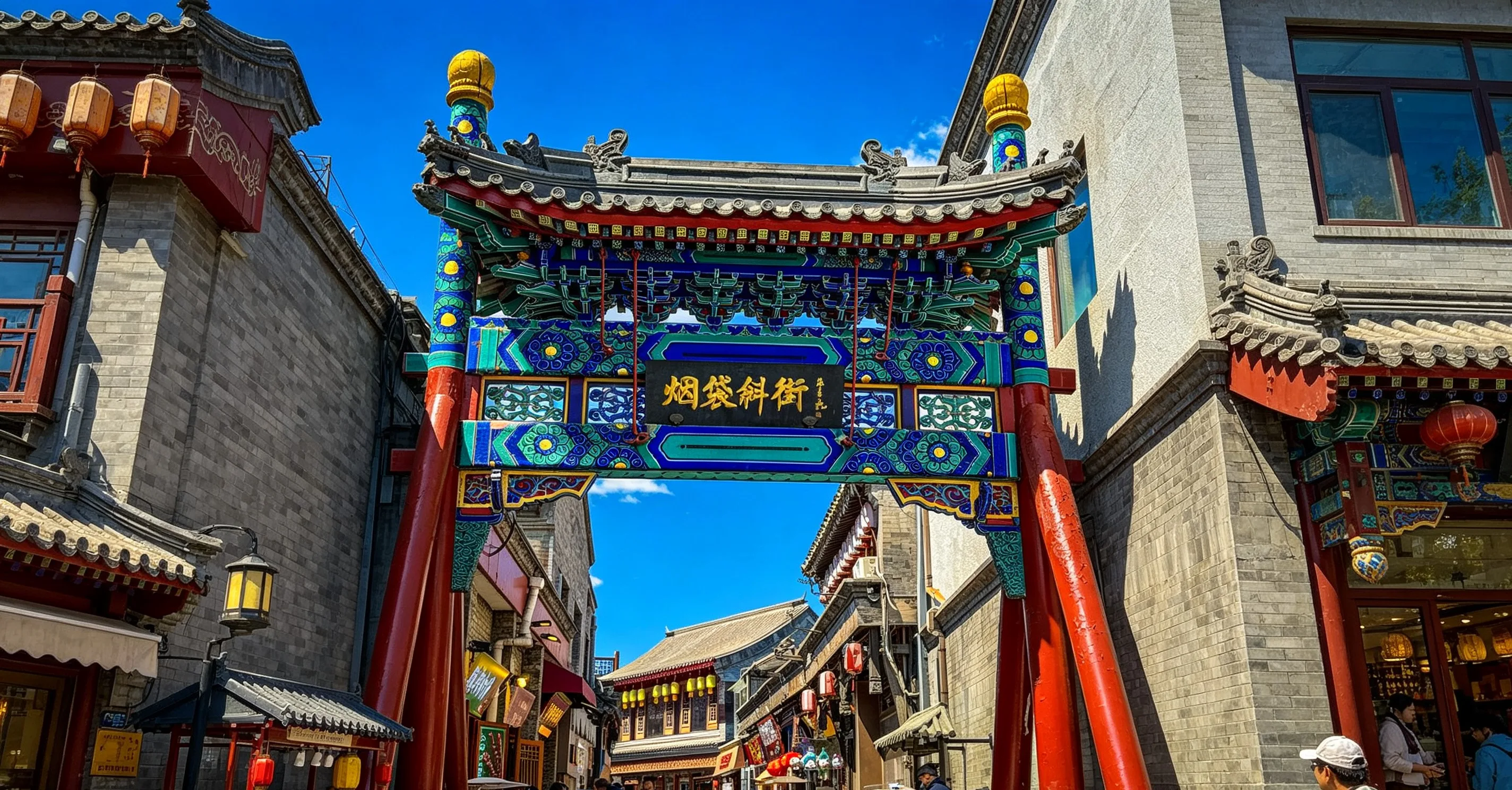
What you can do:
Explore traditional streetscapes
Buy small travel souvenirs
Try Beijing snacks
Take a short break at a teahouse or café
Recommended duration: 1 hour;If you are interested in Yandai Xiejie, you might want to set aside half a day to explore it thoroughly.
3. Yinding Bridge
Continuing along Yandai Xiejie, you soon arrive at Yinding Bridge.
Yinding Bridge connects Qianhai and Houhai, making it a great spot to view the water, the hutongs, and the cityscape.

Suitable for:
A short stroll
Taking photos
Viewing the waters of Shichahai
Shichahai boat tours
4. Shichahai
This is the highlight of the entire half-day itinerary.
Shichahai blends natural waterscapes with traditional urban life. You can see the lake, the hutongs along the shore, waterfront restaurants and bars, and people cycling or taking a stroll.

Recommendations:
You don't need to walk the entire loop around the lake; just choose a section along Qianhai or Houhai.
Daytime is ideal for strolling and taking photos.
The atmosphere is more vibrant and authentic in the early evening.
In summer, avoid the hottest part of the day (around noon).
In winter, ice skating is available when the lake freezes over.
Recommended visit duration: 60–90 minutes
If you are comfortable communicating in Chinese, you can take a rickshaw ride, during which the driver will share interesting stories about the hutongs.
5. Hutong side alleys or Mao'er Hutong
It takes about 5 to 8 minutes to walk from Shichahai to Mao'er Hutong, depending on your starting point.
If you still have the energy, you can walk from Shichahai to the vicinity of Mao'er Hutong.
Mao'er Hutong is quieter than Yandai Xiejie, making it a better place to observe grey-brick walls, siheyuan (courtyard house) gateways, trees, and the daily lives of local residents.
Recommended duration:About 30–45 minutes.
It is not recommended to spend too long in the residential hutongs; a leisurely stroll to observe the neighborhood atmosphere is sufficient.
6. Nanluoguxiang
Nanluoguxiang is one of Beijing's most famous commercial hutong streets. It features a wide array of restaurants, cafés, dessert shops, creative boutiques, and small exhibition spaces. In contrast to the quiet atmosphere of Mao'er Hutong, Nanluoguxiang is livelier—an ideal spot to relax, grab a meal, and wrap up your tour.
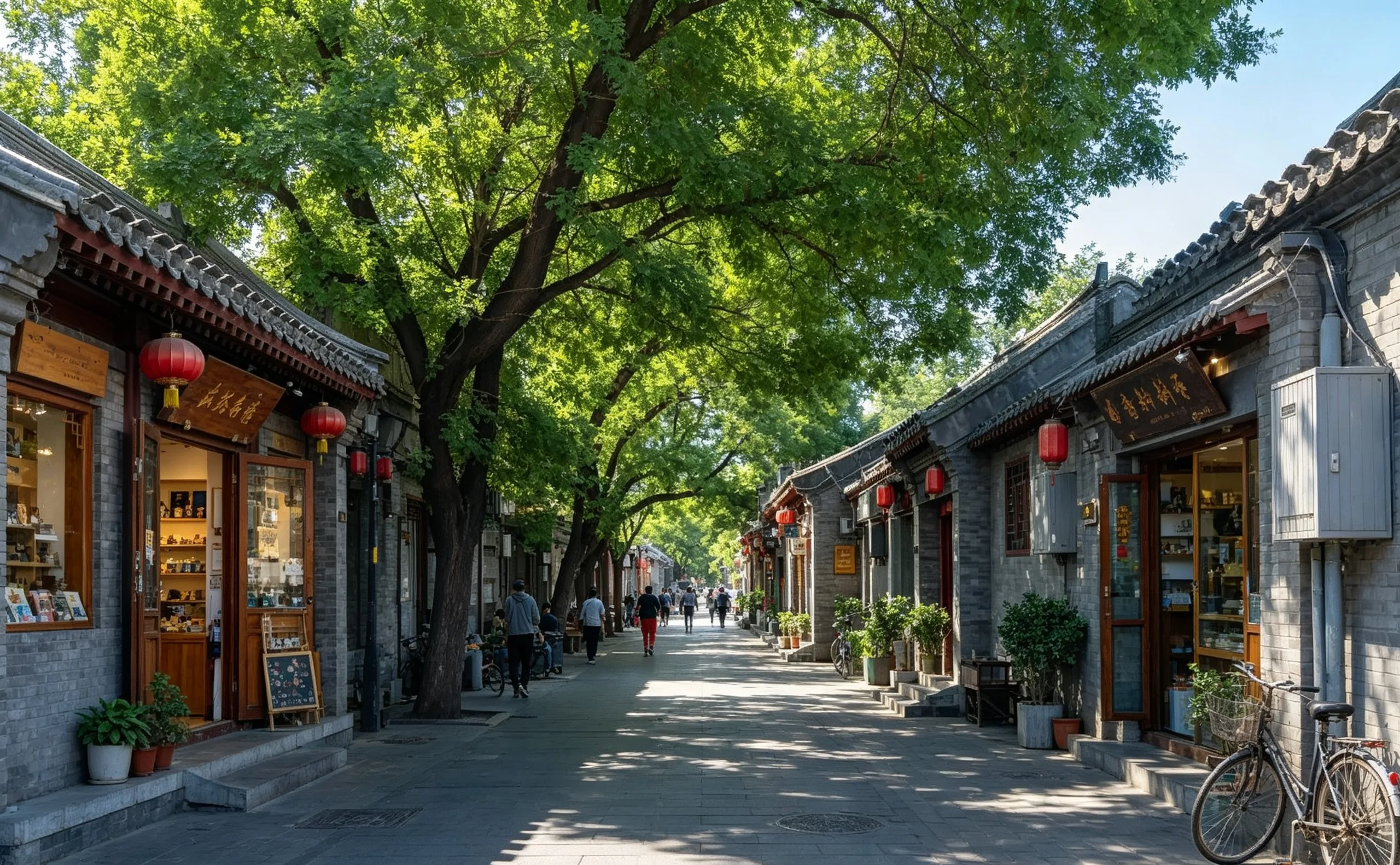
What is there to do in Nanluoguxiang?
Experience the commercial hutong street
Sample Beijing snacks and local cuisine
Relax in a cafes
Shop for creative cultural products
Recommended duration of visit: approximately 45–60 minutes.
There are also several side alleys branching off from Nanluoguxiang. If you have the energy, you might choose to briefly explore one or two that catch your interest, rather than simply walking the main street from end to end.
How should you make a choice if time is extremely tight?
I recommend visiting just one hutong attraction to experience the local hutong lifestyle. If you are looking for a variety of experiences, you can reduce the number of sites you visit.
Drum Tower → Yandai Xiejie → Yinding Bridge → Shichahai → Nanluoguxiang
This route takes about 3 hours and focuses on landmarks, traditional streets, waterside areas, and commercial hutongs.
If you prefer quieter neighborhoods, you could change the route to:
Drum Tower → Mao'er Hutong → Nanluoguxiang → Shichahai
If you prefer taking photos and enjoying night scenery, you could change the itinerary to:
Drum Tower → Yandai Xiejie (Skewed Tobacco Pouch Street) → Yinding Bridge → Evening stroll at Houhai
How do you get around between the hutongs?
Walking
This is the most highly recommended way to explore. The charm of the hutongs lies in the details of the streets and alleys; traveling by vehicle makes it easy to miss the architecture and scenes of daily life along the way.
Advantage:
You can stop to take photos at any time.
Not restricted by one-way streets or parking limitations.
Easier to discover small alleys and shops.
Ideal for experiencing the authentic atmosphere of the hutongs.
Cons:
Can be hot in the summer.
Some road surfaces are uneven.
Crowded on weekends and public holidays.
Requires managing the pace and distance when accompanied by the elderly or young children.
We recommend hiring a guide to accompany you, so you can listen to stories about the hutongs as you walk.
Subway
You can take the subway to the vicinity of Gulou, Shichahai, or Nanluoguxiang and then proceed on foot. However, since the attractions are not very far apart, walking is recommended.
Travel with a private driver and rental car
For guests starting from their hotel, a private driver is ideal for:
Transfers between the hotel and the Drum Tower
Transportation to the starting point of the hutong tour
Return transport to the hotel after the tour
Travel to the airport, train station, or the next destination following the hutong tour
Please note that many hutong lanes are narrow and inaccessible to vehicles. Drivers typically arrange drop-off and meeting points on the surrounding main roads, so visitors should confirm these locations in advance.
Hiring a private vehicle does not mean it can enter every scenic area or the interior of the hutongs. The best approach is usually for the vehicle to handle transfers while visitors explore on foot.
Frequently Asked Questions
Q1. Is half a day enough to explore the hutongs?
Yes. I recommend setting aside 3–5 hours, but don't try to cover the entire old city of Beijing. You’ll have the best experience if you pick one concentrated area and explore it at a leisurely pace.
Q2. Do I need to walk through a lot of hutongs?
No, you don't. It is not recommended to rush through many hutongs in just half a day. Exploring one or two distinctive areas is a more enjoyable experience than simply ticking off a long list of hutongs.
Q3. Do I need a tour guide?
If you would like to gain a deeper understanding of the history and stories behind the hutongs, hiring a tour guide is recommended; it will make your visit much more enriching.
Q4. Do I need to hire a car or a private driver?
If you are staying in the city center, the subway combined with walking is usually sufficient. However, a private driver is more convenient if you are traveling from the airport, a train station, or a hotel further out, or if you are accompanied by elderly people or children. Please note: Many hutongs (traditional alleyways) are inaccessible to vehicles, so drivers usually have to pick you up or drop you off at the perimeter.
Q5. When is the best time to visit?
Either 8:30 AM–12:30 PM or 2:00 PM–6:30 PM works well. Daytime is ideal for strolling and taking photos, while the late afternoon/early evening offers a more authentic local atmosphere. In summer, avoid the hottest part of the day (around noon).
Your Beijing Hutong Tour
If you are interested in a tour of the hutongs and require a guide or a driver, please contact us and let us know your preferences; we can then tailor a personalized Beijing hutong tour just for you.
Recommended Beijing itineraries:
Beijing Badaling Great Wall Private Car Day Trip
Beijing City Highlights Private Car Day Trip
Recommended articles on how to tour the Beijing Central Axis: Beijing Central Axis Guide: Cycle or Charter
More to Read



Plan Your Trip
Let us design your perfect China journey
Our trip designers respond within 24 hours with a personalized itinerary and quote.