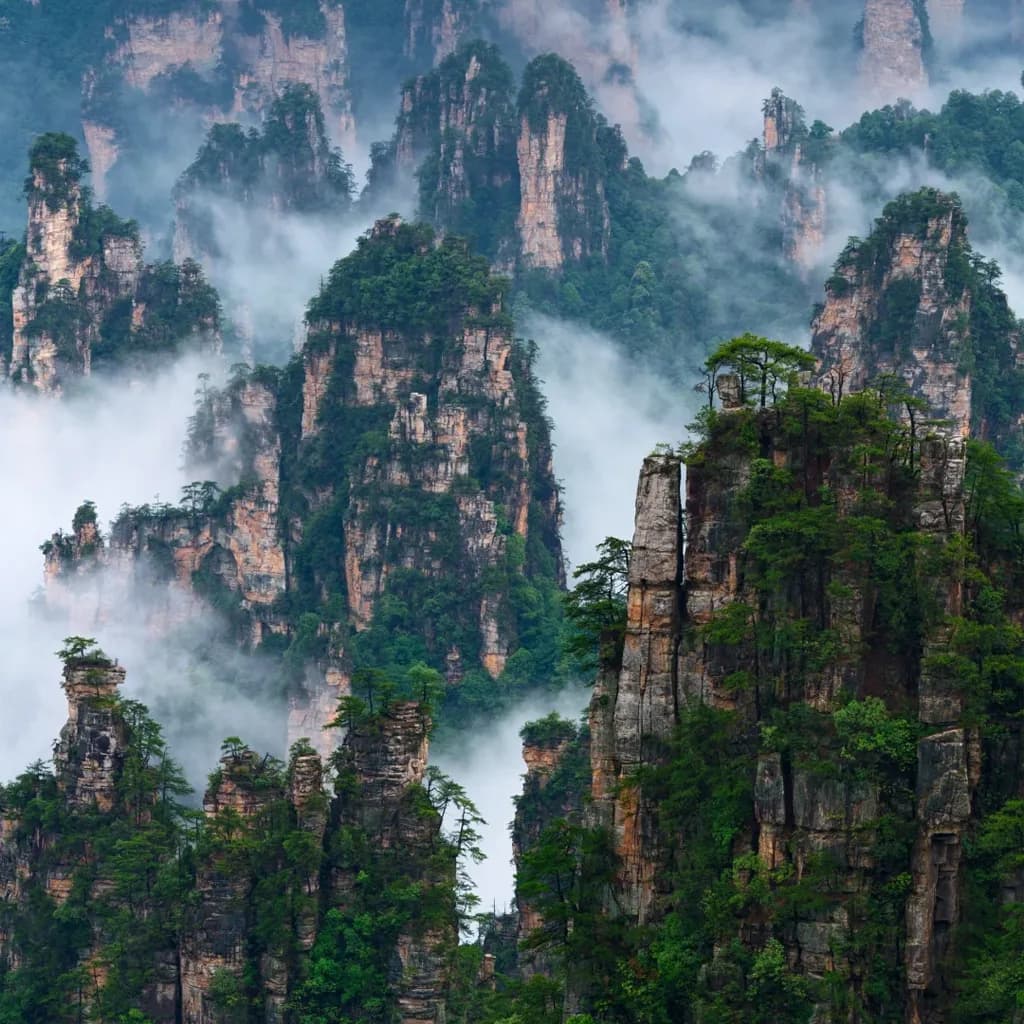
This article explains how a private car helps families in Zhangjiajie reduce travel fatigue between scattered attractions, hotels, and park entrances, while noting that scenic areas still require buses, cable cars, elevators, and walking.
This guide explains why Zhangjiajie can be tiring for families and how private car hire reduces transfer stress, language issues, and hotel-to-attraction logistics. Based on local expertise and practical tips from experienced guides, it clarifies real driving times, scenic area transport limits, and what families with children or elderly parents should expect.
Zhangjiajie is a great family travel destination, but it's not an easy city sightseeing destination. The attractions are spread out, there are many mountain roads, and the scenic area is vast, requiring you to transfer to eco-friendly buses, cable cars, elevators, or walk to many places. This guide is for families with children or elderly parents. We'll tell you how hiring a car can reduce fatigue, and what to be aware of even with a vehicle.
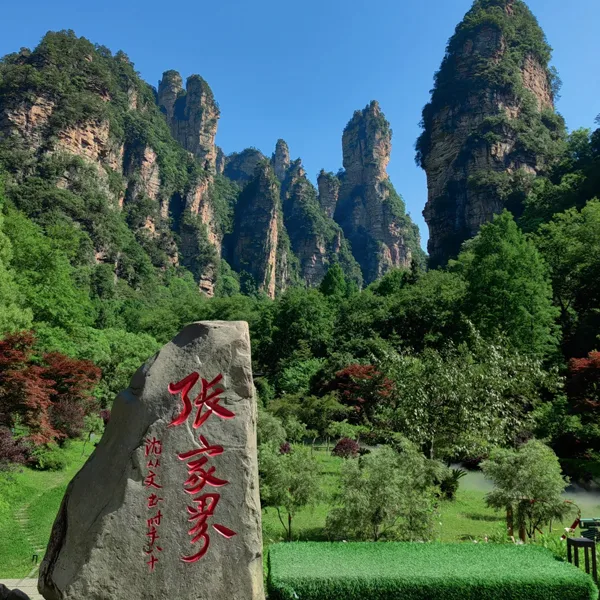
Understanding why Zhangjiajie can easily tire family tourists.
Many foreign tourists, when looking at a map for the first time, assume that the National Forest Park, Tianmen Mountain, and Grand Canyon are all in "Zhangjiajie" and must be very close. In reality, they are located in completely different directions:
Zhangjiajie National Forest Park: Primarily located in the Wulingyuan area, about a 30-40 minute drive from the city center.
Tianmen Mountain: Right next to Zhangjiajie city center; the cable car station is located within the city.
Grand Canyon Glass Bridge: Further east from Wulingyuan, about a 30-minute drive from the forest park.
Zhangjiajie is not a destination where "you have to hire a car everywhere." Many areas within the scenic area still require using the park's eco-friendly shuttle buses, cable cars, elevators, and walking trails for exploration.
For families with children or elderly members, the real fatigue often doesn't stem from any particular attraction, but rather from the accumulation of various small problems over several days: starting late in the morning leads to longer queues at attractions; children getting tired and needing to transfer back to the hotel; too much luggage requiring repeated transport when changing hotels; inconvenience due to rain or queues; and difficulty explaining hotel names, park entrances, and pick-up/drop-off points when there's a language barrier. Hiring a car doesn't reduce walking within the scenic area, but it significantly reduces these tiring aspects.
First stop: Zhangjiajie National Forest Park
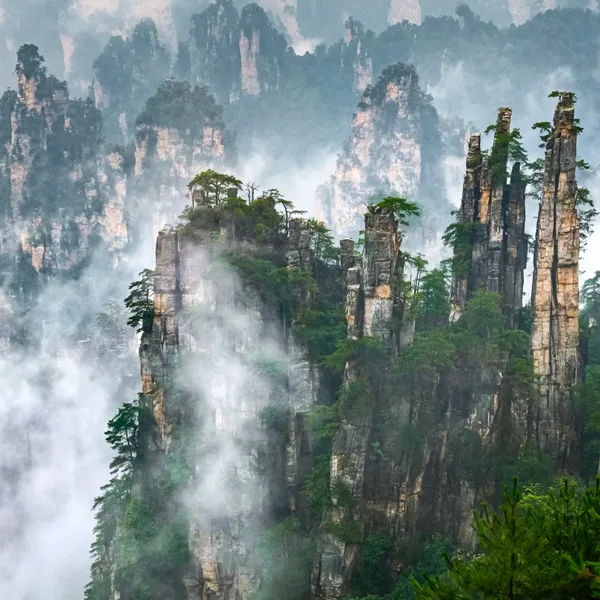
Zhangjiajie National Forest Park (also known as Wulingyuan Scenic Area) is China's first national forest park and the inspiration for the floating mountains in the movie Avatar. The park includes several areas such as Yuanjiajie, Tianzi Mountain, Yangjiajie, Golden Whip Stream, and Ten-Mile Gallery.
Ticket information:
Scenic Area Combo Ticket (Entrance Ticket + Environmental Protection Bus): ¥224
Inter-scenic Area Transportation: Bailong Elevator ¥65, Tianzi Mountain Cableway ¥72, Yangjiajie Cableway ¥76, Huangshizhai Cableway ¥65, Ten-Mile Gallery Mini Train ¥38.
Entry point selection:
The park has five ticket stations: East Gate (Wujia Yu Ticket Station), South Gate (Forest Park Ticket Station), West Gate (Yangjiajie Ticket Station), North Gate (Tianzi Mountain Ticket Station), and Central Gate (Zimugang Ticket Station). The Wulingyuan urban area, where the East Gate is located, offers better services and more accommodation options, but the queues for entry during peak season are relatively long. The North Gate (Tianzi Mountain Ticket Station) allows direct access to the mountain without taking the cable car, making it a good choice for elderly people and children prone to motion sickness.
Why do forest parks often tire out family visitors?
The forest park is very large, and the operating rules for the internal eco-friendly shuttle buses are relatively complex. The shuttle buses on the mountain only connect to the scenic spots at the top of the mountain, while the shuttle buses at the bottom of the mountain operate in sections and cannot connect across sections. To go up and down the mountain, you must use the Bailong Elevator or cable car.
For families, the most important things to think about in advance are: which area is more convenient to stay in, which entrance is more suitable from the hotel, which exit to take on the day, and how to get back to the hotel smoothly if children or the elderly get tired.
In which situations is it more suitable to charter a car?
The hotel is not located in the core area of Wulingyuan.
We are traveling with elderly people or children and do not want too many temporary transfers.
We want to arrive at the scenic area early to avoid peak queues.
We plan to enter from one entrance and exit from another area.
After the tour, we will need to go to the train station, airport, or change hotels.
If your budget allows, consider tours that offer VIP skip-the-line service. VIP lanes can save families a significant amount of queuing time, making them especially suitable for families with elderly members and children.
Second stop: Tianmen Mountain National Forest Park
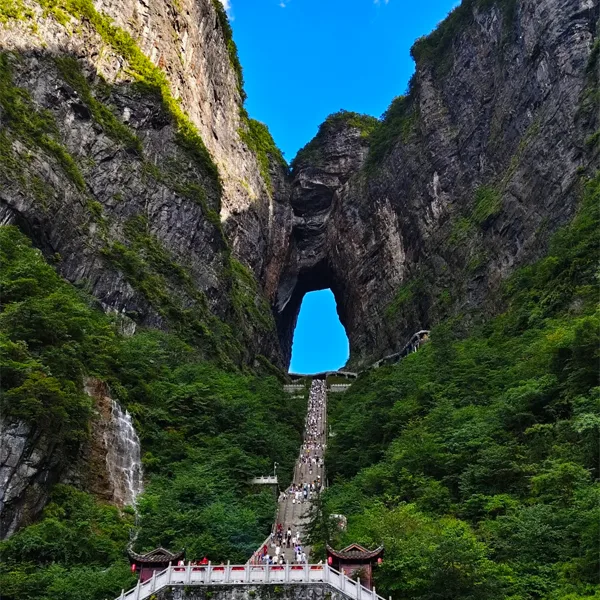
Tianmen Mountain is located near Zhangjiajie City and is famous for Tianmen Cave (the world's highest natural cave through a mountain) and the 999-step Heavenly Ladder.
Ticket information:
A/B/C Line Package (Round Trip Cable Car): ¥278
Optional Excursions: Glass Walkway Shoe Covers ¥5, Mountain Escalator ¥32, Summit Forest Sightseeing Cable Car ¥25
Route selection:
Route A (Recommended): City cable car up the mountain → Tongtian Avenue eco-bus → Tianmen Cave → Mountain top loop → Expressway down the mountain. Most complete experience, no backtracking.
Route B (Optional when crowded): Expressway up the mountain → Tianmen Cave → Mountain top loop → Eco-bus + cable car back to the city. Off-peak, shorter queues.
Route C (For those who prefer convenience/elderly/children): Expressway up and down. Minimal transfers, easiest option.
Why should families pay attention to Tianmen Mountain?
Tianmen Mountain is very close to Zhangjiajie city, leading many tourists to believe that "it's not far and should be easy to visit." However, for families, the real considerations for visiting Tianmen Mountain are time management and energy allocation, not distance.
Visiting Tianmen Mountain involves walking, queuing, and going up and down the mountain, and children and the elderly usually expend a lot of energy by the end.
The Value of Chartering a Car at Tianmen Mountain:
Departs promptly from the hotel in the morning, saving time.
No need to find transportation after the tour.
More flexibility in adjusting plans if the weather changes.
After Tianmen Mountain, you can go directly to your next hotel, train station, or airport.
If a family is staying in the city center, and the hotel is close to the cable car station, and only plans to visit Tianmen Mountain, taking a taxi is perfectly feasible.
It's not recommended to schedule Tianmen Mountain and the Grand Canyon on the same day. Although it may seem possible on the map, it will actually be very tiring. Tianmen Mountain itself takes 5-6 hours, and with travel and meals, children and the elderly will have almost no time to rest by the end of the day.
Third stop: Zhangjiajie Grand Canyon
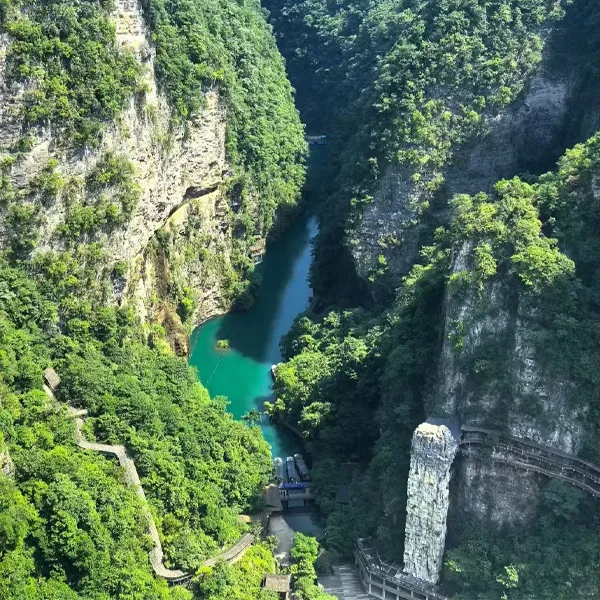
The core highlight of Zhangjiajie Grand Canyon is one of the world's highest and longest glass bridges. It is famous for its canyon streams, cliff waterfalls, and the world-renowned "Sky Roller Coaster" glass bridge.
Ticket information:
Route A (Grand Canyon only) ¥53, Route B (Grand Canyon + Glass Bridge) ¥178.
Opening hours are 08:00-16:00, recommended visit time is 3-5 hours.
The scenic area features sightseeing elevators, passenger cableways, glass bridges, canyon sightseeing boats, cliffside elevators, and other tourist facilities, as well as walking trails and boardwalks. Various interactive experiences are also available for purchase based on individual preferences.
Grand Canyon restrictions for family visitors
For families, the biggest problems are usually: the distance from the city center and most accommodation areas; the inflexibility of public transportation when returning from the city; the fatigue after the tour, making children prone to exhaustion; the glass bridge experience may be affected if it rains; and the lack of flexibility in public transportation when plans are changed at the last minute.
More suitable for families hiring a car:
Take children to the glass bridge and worry about long queues and transfers on the return trip.
Accompanying elderly people who don't want to deal with transportation issues after the hike.
Need to get directly from the Grand Canyon to the city, airport, or high-speed rail station on the same day.
Itinerary is affected by weather and requires flexibility.
For larger families, splitting the costs is more reasonable than taking multiple taxis.
How to arrange family trips more reasonably
For families, it's not recommended to have a packed itinerary in Zhangjiajie every day. A better pace is to visit one core scenic area each day, with at most one light activity.
Recommended Itinerary
Day 1: Arrive in Zhangjiajie
Evening: Explore Xibu Street Night Market
Day 2: Zhangjiajie National Forest Park
Mainly visit Yuanjiajie (Qiankun Pillar, the prototype of the floating mountains in Avatar, and the First Bridge Under Heaven) and Tianzi Mountain
Day 3: Yangjiajie + Golden Whip Stream + Ten-Mile Gallery
Morning: Visit Yangjiajie, the natural Great Wall is less crowded and has beautiful scenery. Afternoon: Hike along the Golden Whip Stream trail, passing filming locations for Journey to the West, where you may often see wild monkeys. Afternoon: Take the Ten-Mile Gallery mini-train (38 RMB one way).
Day 4: Tianmen Mountain → Return Trip
Visit Tianmen Cave, you can choose to climb the 999 steps of the Heavenly Ladder or take the escalator through the mountain.
If time permits, you can add a day to visit Zhangjiajie Grand Canyon.However, you should never try to cram the forest park, Tianmen Mountain, and Grand Canyon into two days.
How to choose accommodation
Accommodation in Zhangjiajie can be roughly divided into three areas:
Wulingyuan District: Closest to the main gate of Zhangjiajie National Forest Park, making it the top choice for visiting the park. Staying in Wulingyuan allows for easy entry into the park in the morning and convenient return in the evening. This is the core area, saving considerable commuting time.
City Area (Yongding District): Close to the Tianmen Mountain cable car station, offering convenient dining and shopping options. Ideal for those only visiting Tianmen Mountain or using it as a transit point.
Grand Canyon Area: Suitable for tourists who enjoy close contact with nature; some hotels also offer hot springs.
The most important strategy: Stay in Wulingyuan when visiting Zhangjiajie National Forest Park, and stay in the city area when visiting Tianmen Mountain. Choosing the right hotel can truly save you half the effort, avoiding two hours of travel each day.
What season is the best to go?
Zhangjiajie boasts unique charm in each season, but families should avoid extreme seasons and peak holiday periods for travel.
Autumn (September-November): Clear skies, vibrant autumn colors, and stunning forests make this the best time to visit. Avoiding the summer holidays and National Day peak, visitor numbers are reduced by 30%, and accommodation prices drop by 20%, offering the best value.
Spring (March-May): Wildflowers bloom in abundance, shrouded in mist, with temperatures ranging from 15-25℃, providing comfortable temperatures and a moderate number of tourists, making it ideal for families.
Summer (June-August): Cool and refreshing, but occasional thunderstorms are possible. It's peak tourist season, with daily visitor numbers exceeding 50,000. Queues for the East Gate cable car can exceed two hours. Entry to the park can take two to three hours, and queues for shuttle buses and eco-friendly vehicles can also be three to four hours long.
Winter (December-February): Enjoy snow scenery and rime ice. Fewer tourists (only 1/5 of the peak season), but some mountain facilities may be closed. Temperatures are low (-5 to 5℃).
Visa and Pre-departure Preparations
Visa: Most countries require a Chinese tourist visa (L visa) in advance. It is recommended to begin preparations 2-3 months before your planned departure, consulting the local Chinese embassy/consulate or visa application center for specific requirements.
Flights: Zhangjiajie Hehua Airport offers direct flights from cities such as Beijing, Shanghai, Guangzhou, Chengdu, and Xi'an. You can also take the high-speed train from Changsha (approximately 2.5 hours) to Zhangjiajie West Railway Station.
Travel Insurance: It is recommended to purchase travel insurance that includes medical coverage and trip cancellation protection.
Weather Preparation: The weather in the Zhangjiajie mountain area is changeable. It is recommended to bring a raincoat (umbrellas are not windproof), a windproof jacket, non-slip hiking shoes, sunscreen, a hat, and sunglasses. Temperature differences are significant at the summit; even in summer, a light jacket is recommended.
Documents: Entry to the scenic area requires real-name registration; please carry your original passport. Tickets need to be booked online 1-3 days in advance, and at least 3-7 days in advance during peak season.
Hotel Booking: Booking popular hotels 2-4 weeks in advance is recommended, especially during spring, autumn, and holidays.
Payment methods: Alipay and WeChat Pay are accepted in most places. It's recommended to link an international credit card in advance. You can also bring some RMB cash for small shops, street vendors, and some taxis.
Language: Basic English is acceptable in major scenic areas and some hotels, but it's advisable to download a translation app beforehand.
About monkeys: There are wild monkey troops in the Jinbian Stream area. Please do not provoke or feed them. Keep an eye on children and any food you have with you.
Recommended chartered car tours in Zhangjiajie
If you are interested in traveling to Zhangjiajie and would like to bring your family and friends, please contact us to customize a trip based on your interests.
Recommended classic one-day tour of Zhangjiajie:
Grand Canyon Glass Bridge Zhangjiajie Private Day Trip
Tianmen Mountain Tour Zhangjiajie by Private Car
Wulingyuan National Forest Park Tour from Zhangjiajie
This attraction link is from: China Travel Book
Frequently Asked Questions
Do families need a private car for every part of a Zhangjiajie trip?
No. A private car helps mainly with city-to-scenic-area transfers, hotel changes, and getting to the correct entrances, but it does not replace transport inside the attractions. In the scenic zones, families still need eco-friendly buses, cable cars, elevators, and walking trails.
How far is Zhangjiajie National Forest Park from the city center?
Zhangjiajie National Forest Park is mainly in Wulingyuan, around 30 to 40 minutes by car from central Zhangjiajie. This makes timing important for families, especially if you want to avoid late starts and longer queues.
Is Tianmen Mountain close to downtown Zhangjiajie?
Yes. Tianmen Mountain is next to Zhangjiajie city center, and the cable car station is located in the city. It is much easier to access than attractions that require driving out toward Wulingyuan or the Grand Canyon area.
How far is the Grand Canyon Glass Bridge from Wulingyuan?
The Grand Canyon Glass Bridge lies east of Wulingyuan and is about a 30-minute drive from the forest park area. Families should factor in this extra transfer time when planning a multi-site day.
How does hiring a car reduce travel fatigue in Zhangjiajie?
A private car reduces the repeated strain of finding entrances, moving luggage, returning early when children are tired, and managing pick-up points in bad weather or with language barriers. It saves energy on logistics, even though it does not reduce the walking required inside the scenic areas.
More to Read
Plan Your Trip
Let us design your perfect China journey
Our trip designers respond within 24 hours with a personalized itinerary and quote.