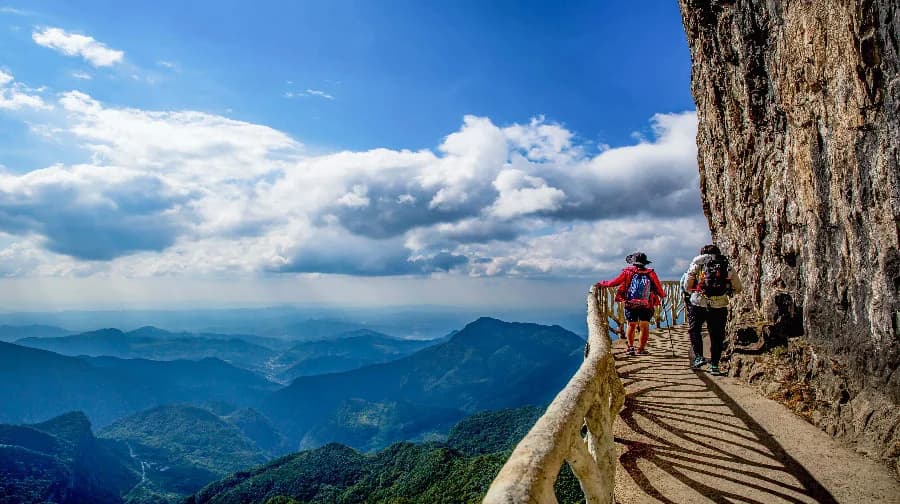
If your impression of Chongqing is limited to the nightscape of Hongya Cave or the light rail train passing through a residential building, the areas surrounding the city will recalibrate your perspective.
To the northeast, Wulong features dramatic natural sinkholes and deep fissures carved into the mountains; to the west, Dazu boasts an entire cliff face transformed into an open-air museum of stone carvings; to the southeast, the Wujiang River cuts through the heart of Miao ethnic territory, creating a hundred-mile-long gallery of canyon scenery; and deeper into the Fuling district, you’ll find the world’s largest man-made underground cavern, alongside a rugged canyon perfect for hiking. The regions surrounding Chongqing are not merely "side trips"—they represent an entirely different side of the city.
This guide will show you the unique attractions beyond the city center that you can explore on a one-day chartered excursion from Chongqing.
Route 1: Wulong Karst—only when standing at the bottom of a giant sinkhole do you truly grasp the meaning of "enormous."
Best for: First-time visitors to Chongqing who want to see world-class natural wonders and don’t mind walking along some mountain paths.
How to explore the key attractions
The Three Natural Bridges
Tianlong Bridge, Qinglong Bridge, and Heilong Bridge span the same gorge in succession, framed by cliffs rising over 200 meters high. Descend to the valley floor by elevator and look up from the walking path; the stone bridges loom overhead like the skeletons of colossal beasts. This site served as a filming location for both Transformers: Age of Extinction and Curse of the Golden Flower—it possesses a cinematic quality that requires no filters.
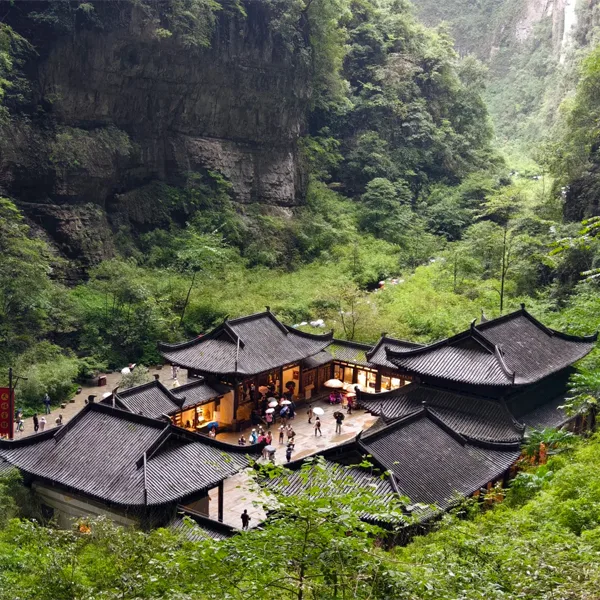
Recommended duration: 1.5–2 hours. The light is soft in the morning, and there are relatively fewer visitors.
Longshuixia Fissure
The fissure reaches a depth of 350 meters. A walkway winds along the cliff face, while waterfalls cascade from above, sending a fine mist into the air. In stark contrast to the "looking upward" perspective of a giant sinkhole, this experience is defined by a sense of "descending deep" into the earth.
Alternative option: If your group includes elderly people or children, you could swap the "Earth Fissure" (Di Feng) for the Fairy Mountain (Xiannv Shan) grasslands; with its alpine meadows and a small tourist train, it makes for a much more relaxed experience.
Fairy Mountain (Xiannv Mountain)
Fairy Mountain is the most "leg-friendly" stop in the Wulong area. Alpine meadows blanket the mountain ridges, where cattle and sheep roam freely, and a small tourist train meanders leisurely through the grasslands and pine forests. In the summer, it serves as a cool retreat for the people of Chongqing looking to escape the heat, while in the winter, it transforms into a ski resort.
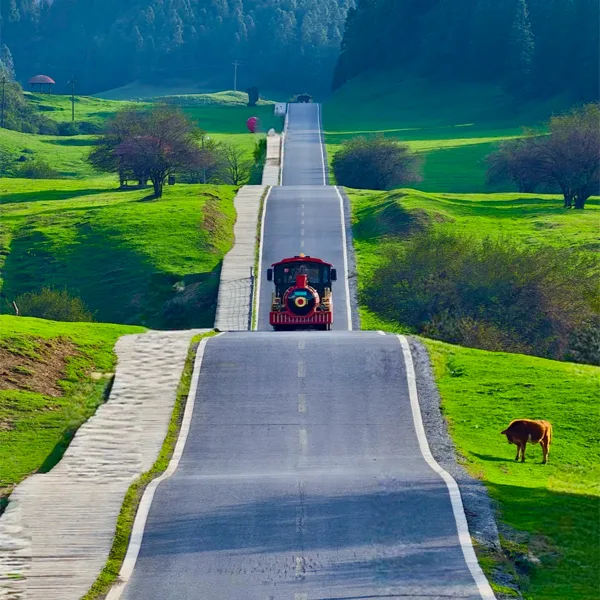
How to explore: Take the small train to the central grassland area and walk along the trails; if you prefer to save energy, you can stay on the train for the entire route. For those visiting with children, there are opportunities for horseback riding and kite flying, and the camping area becomes quite lively in the summer.
Recommended duration: about 2 hours.
How do I arrange a chartered vehicle?
From the city center, take the G65 Baotou–Maoming Expressway; the drive to Xiannv Town takes approximately 2.5 hours.
Spend the morning exploring the Three Natural Bridges (Tiansheng Sanqiao), then enjoy a lunch of local mutton dishes or farmhouse-style cuisine in Xiannv Town.
For the afternoon, choose one of two options: descend further into the Longshuixia Fissure (Longshuixia Difeng), or head up to Xiannv Mountain to experience a change of scenery with its expansive grasslands.
Recommended Itinerary:
Wulong Tiansheng Sanqiao and Fairy Mountain Private Car
Chongqing Three Natural Bridges and Longshuixia Private Car
Route 2: Dazu Rock Carvings—Reading a Chinese story written in stone upon the cliff face
Who it’s for: Those with an interest in history and culture, a love for the art of sculpture, and a willingness to slow down and listen to the commentary.
How to explore the key attractions
Baoding Mountain
Baoding Mountain is a "story mountain" where the cliff faces are entirely covered in carvings. Here, you can behold the Thousand-Armed Guanyin in the Great Buddha Bay, its gold leaf shimmering in the dim light, and a Reclining Buddha—stretching over thirty meters in length—with eyes half-closed in repose.
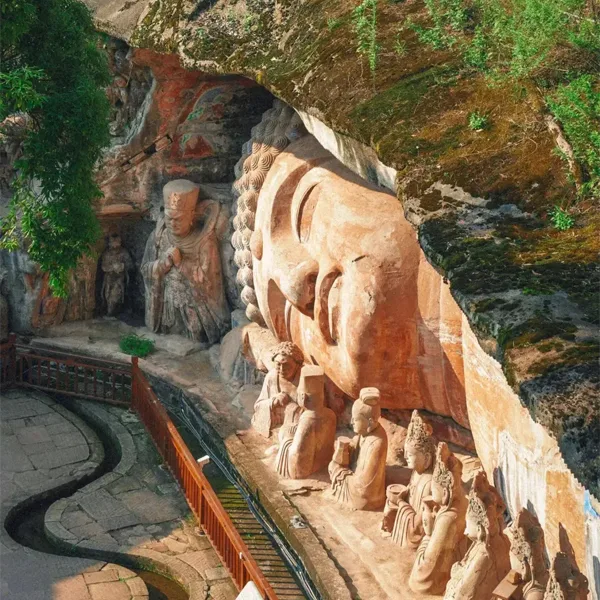
Before entering the scenic area, you can watch a 20-minute 8K fulldome film, which is very helpful for understanding the background of the stone carvings.
Beishan
The Bodhisattva figures, dating from the late Tang to the Southern Song dynasty, possess an elegant grace; the folds of their robes, carved into the rock of the scripture-repository grottoes, remain clearly discernible. When standing before these grottoes in the absence of crowds, one can almost sense the stone itself breathing.
How do I arrange a chartered vehicle?
It takes about 1.5 hours to travel from the city center to Dazu. You can visit Baoding Mountain first, then drive 15 minutes to Beishan after lunch.
Since there is a distance to cover between these two main scenic areas, hiring a private vehicle saves you the hassle of navigating public transportation between Baoding Mountain and Beishan.
Recommended Itinerary:
Chongqing Dazu Rock Carvings Tour by Private Car
Route 3: Pengshui—gateways to the Miao homeland, boats on the Wujiang River, and a river perfect for rafting.
Who it’s for: Those who enjoy ethnic culture, want to take a boat trip through gorges, are looking for water-based activities like rafting in the summer, or prefer a route that’s a bit more "off the beaten path" compared to Wulong or Dazu.
How to explore the key attractions
Chiyou Jiuli City
A complex of Miao-style architecture sits on the hillside, featuring nine successive gates and the grand Jiuli Palace—an imposing and magnificent sight. At midday, I enjoyed a "long-table banquet" within the scenic area; Miao women served bowls of wine while singing traditional toasting songs, creating an incredibly immersive and vibrant atmosphere.
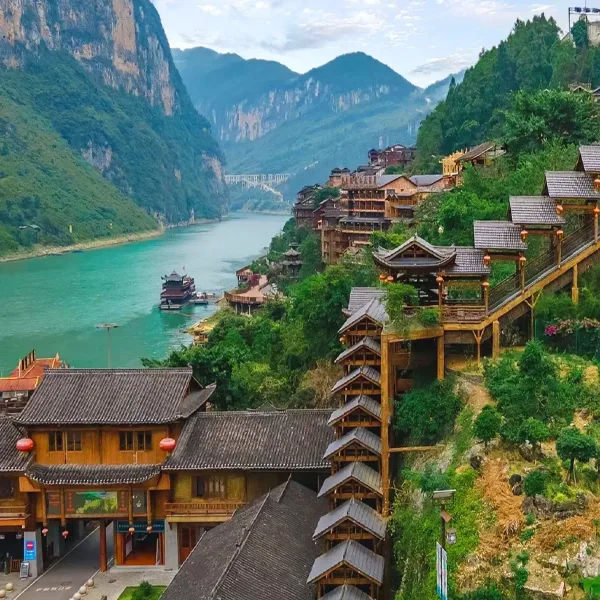
Wujiang Gallery
Board a boat at either Gaogu or Hongdu Pier for a journey lasting about an hour. On a clear day, the water takes on an unreal shade of green—this is the most relaxing stretch of the entire route.
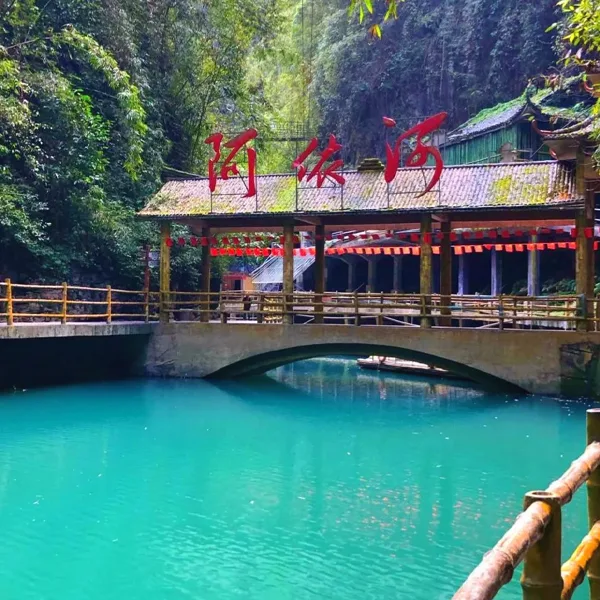
Ayi River
The full-length rafting route takes five to seven hours, while the half-length route takes about four hours; both feature a mix of rapids and calm stretches. It is most exhilarating in the summer when water levels are high, but it demands significant physical stamina and time. It is best combined with a visit to either Jiuli City or the Wujiang Gallery—don’t try to cram everything into a single day.
How do I arrange a chartered vehicle?
The drive to Pengshui takes approximately 2.5 to 3 hours. A one-day trip can be quite tight, so it is advisable to set off early and limit the number of attractions you visit.
Since the starting and ending points for rafting are often in different locations, your driver can wait for you downstream.Avoid the misery of being soaked to the bone while trying to find a vehicle.
Recommended Itinerary: Chongqing Wujiang Gallery and Ayi River Private Car
Route 4: Fuling — home to the "world’s largest man-made cavern" underground, and a gaping fissure on the surface.
Who it’s for: Those with an interest in both deep history and geological wonders, who don’t mind walking along cliffside boardwalks, and who are looking for a route that’s “off the beaten path.”
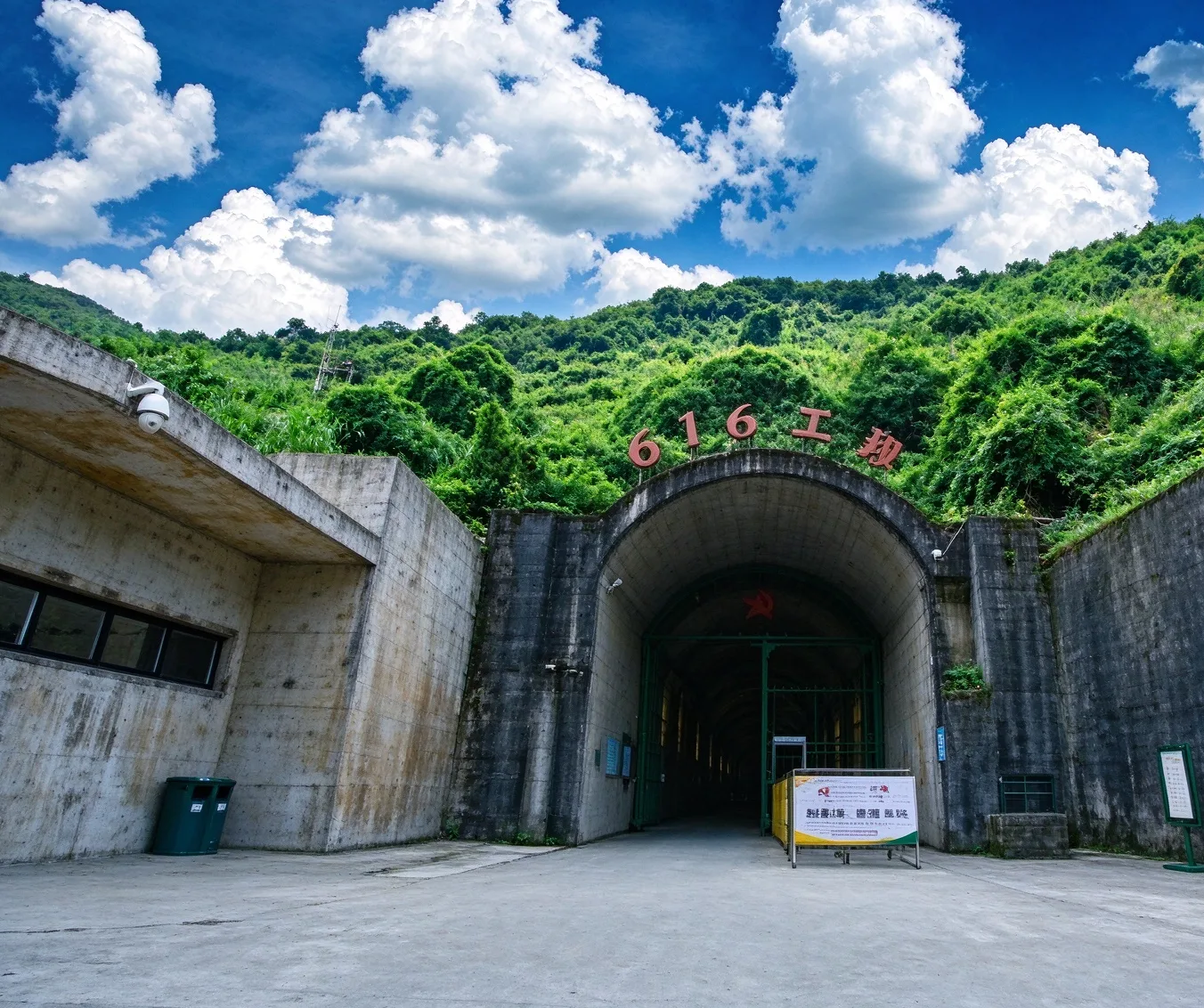
Project 816
The hall rises nine stories high, with a water-diversion tunnel leading directly to the Wu River; inside, the temperature remains a constant 17°C year-round. As you step in, the temperature plummets, and the light hits the massive concrete structures—silent and imposing. Of the entire route, this is the point that most transcends the bounds of everyday experience.
Baiheliang Underwater Museum
A 91-meter-long escalator descends to the riverbed, where you can view—through glass windows—a Tang Dynasty stone fish and various historical hydrological inscriptions, all preserved in their original location. Please note that the site is closed on Mondays, so plan your visit accordingly.
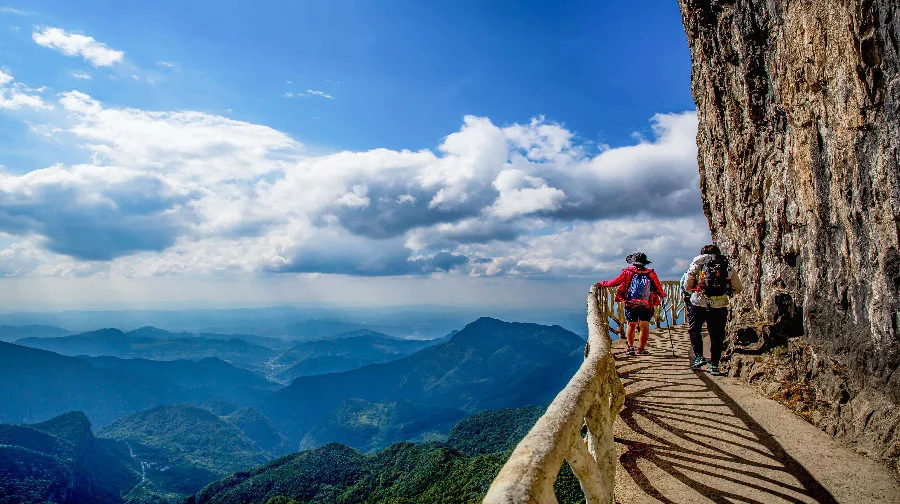
Wuling Mountain Grand Rift Valley
The trail features a succession of sheer, fortress-like cliffs, cascading waterfalls, and narrow, slit-like fissures. The hike takes about 3 to 3.5 hours, and the air is so rich in negative oxygen ions that walking through it feels like giving your lungs a thorough cleanse. Drivers typically wait at the exit, allowing you to hop straight into your vehicle for the return trip once you finish the hike.
How can a chartered vehicle be arranged?
You can choose between Option A: Project 816 + Baiheliang Underwater Museum, or Option B: Project 816 + Wuling Mountain Great Rift Valley.
Recommended Itinerary: Chongqing 816 Project and Wulingshan Rift Valley Private Car
How should I choose between the four lines?
Wulong: Home to sinkholes and fissures—a place with an exceptionally high concentration of natural wonders; approximately a 2.5-hour drive away.
Dazu: Home to rock carvings with an exceptionally high density of humanistic detail; approximately a 1.5-hour drive away.
Pengshui: Miao ethnic culture + Wujiang River + rafting; travel time approximately 2.5–3 hours
Fuling: Underground engineering projects + a museum beneath the river / a rift valley; approximately 1.5–2 hours by car.
What exactly does hiring a private vehicle solve for a one-day trip around Chongqing?
Attractions are often separated by mountains—such as the Wulong Karst Sinkholes and Fissure, the Baoding and Beishan sites in Dazu, or the Jiuli City and the wharf in Pengshui. Public transport operates on fixed schedules, whereas a chartered vehicle allows you to set your own pace.
Entrances and exits are rarely in the same place—whether it’s the end of a rafting route, the exit of a gorge, or a designated scenic area exit. A private driver can wait for you right there, saving you the trouble of searching for transport after you finish your activity.
Allow extra time for your return journey—fog frequently descends in mountainous areas during the afternoon. A local chartered driver knows the terrain well and can adjust your departure time based on road conditions, sparing you the stress of constantly checking public transport schedules while you’re trying to enjoy your trip.
How to use the RideCN platform
On the RideCN page for one-day chartered car services in Chongqing, you can filter routes and vehicle types based on destinations such as Wulong, Dazu, Pengshui, or Fuling. The quoted price typically covers both the use of the vehicle and the driver’s service. The itinerary can be flexibly adjusted based on the day’s road conditions and your personal preferences.
More to Read


Plan Your Trip
Let us design your perfect China journey
Our trip designers respond within 24 hours with a personalized itinerary and quote.