This article explains which China day trips are better by private car than public transport, using examples like Beijing to Mutianyu and Xi'an to the Terracotta Warriors to compare time, convenience, and flexibility.
This guide identifies China day trips where hiring a private car is more efficient than using public transport, based on local expertise and practical tips from experienced guides. It compares travel times, access convenience, and on-the-ground flexibility for routes such as Beijing to Mutianyu Great Wall and Xi'an to the Terracotta Warriors.
When traveling in China, the public transportation systems in many major cities are indeed very well-developed—the subways are clean and efficient, and the high-speed rail network is world-class. However, for specific scenarios like "day trips," public transportation is often not the most time-efficient option.
Follow this guide to discover day trips in China that are perfect for hiring a car.
1. Beijing → Mutianyu Great Wall
The Great Wall is the most desired tourist attraction for the vast majority of foreign tourists visiting China, bar none.
Several sections of the Great Wall around Beijing are open to tourists, among which Mutianyu is the most suitable choice for first-time visitors to Beijing—it is less crowded than Badaling, has complete facilities (with cable cars and toboggan runs), and the walls are well-maintained while retaining their original appearance.
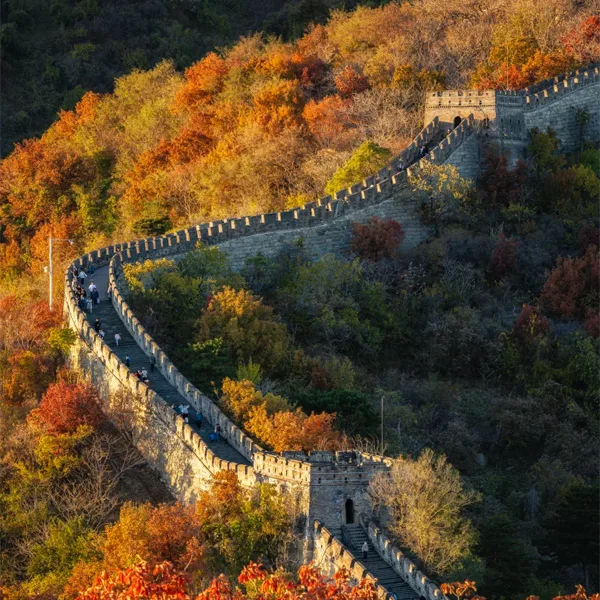
Time comparison between chartered car vs. public transportation:
Public Transportation: Hotel → Subway (30-40 minutes) → Bus Hub (waiting + ride 1.5 hours) → Great Wall, approximately 2-2.5 hours one way.
Chartered Car: Direct departure from the hotel, approximately 1.5 hours one way, saving over 1 hour.
Advantages of chartering a car: Direct transportation from city hotels to the scenic area parking lot. The return time is entirely up to you. If you have energy and want to play a little longer, no problem; if you are tired and want to go back to the hotel to rest earlier, that's also entirely up to you.
Objective advice: If you are on a very tight budget and have plenty of time, public transportation can complete this route. However, if your goal is to be "easy, hassle-free, and hassle-free," hiring a car is clearly a better option.
Recommended trips: Beijing Great Wall Tour & Forbidden City by Car
2. Xi'an → Terracotta Warriors + Huaqing Palace
The Terracotta Army is one of China's most representative historical sites and the absolute core of any trip to Xi'an. Most tourists naturally schedule the Terracotta Army and Huaqing Palace on the same day, as these two attractions are located on the same route east of Xi'an city, making them geographically convenient and forming a classic one-day tour of eastern Xi'an.
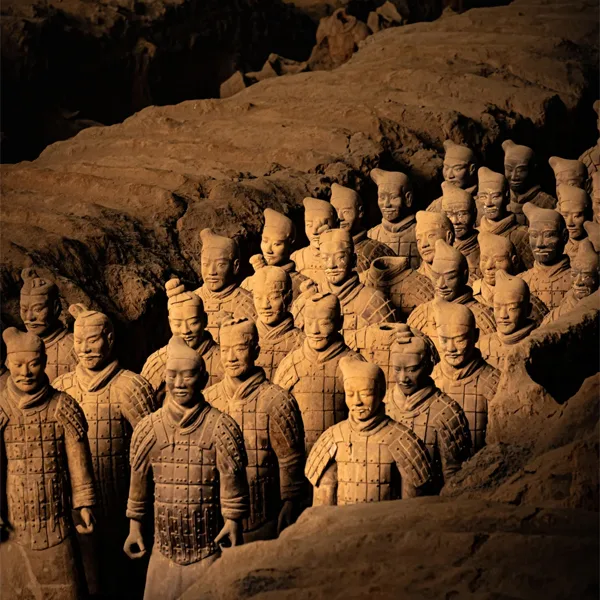
Time Allocation Suggestions:
Terracotta Army: Allocate at least 2.5 hours, ideally 3-4 hours. While Pit 1 is breathtaking, the military formation layout of Pit 2 and the command post structure of Pit 3 are equally worth exploring in detail. The bronze chariots and horses exhibition hall contains national treasures. It would be a pity to only glance at Pit 1 and leave.
Huaqing Palace: Approximately 1.5-2 hours. If you are interested in Tang Dynasty history, the love story of Yang Guifei and Emperor Xuanzong, and the natural scenery of Mount Li, this is worth a stop.
Why does hiring a car save time?
The Terracotta Warriors are about 40 kilometers from downtown Xi'an. Public transportation (subway + bus or tourist line) is available, but it takes longer:
Public Transportation Option: Take the subway from downtown to Fangzhicheng Station, then transfer to bus route 5 or 306 to the Terracotta Warriors (taking a taxi will require waiting time). If you also want to visit Huaqing Palace, you'll need to wait for a bus or taxi between the two attractions, and you'll have to figure out return routes after a long day.
Hired Car Option: Direct service from your hotel to Huaqing Palace or the Terracotta Warriors. After visiting one attraction, you can hop on the car and head to the next, without waiting for buses or searching for bus stops in the sun. You'll be dropped off directly back at your hotel in the evening, perfectly connecting to dinner time.
If you're only visiting the Terracotta Warriors, public transportation (subway + bus) is acceptable and much cheaper. However, if you plan to combine the Terracotta Warriors with Huaqing Palace, hiring a car offers a significant time advantage—the seamless connection between the two attractions can save you 1-2 hours of waiting and transfer time.
Recommended trips: Terracotta Army Tour Xi'an - Private Car Full Day
3. Xi'an → Mount Hua
Mount Hua is one of China's most famous mountain scenic areas, renowned for its precipitous terrain—sections like the Plank Road in the Sky and the Hawk's Turn captivate countless mountaineering enthusiasts. Even without venturing into the dangerous paths, Mount Hua's five main peaks (east, west, south, north, and central) offer magnificent panoramic views of the Qinling Mountains. A day trip to Mount Hua can be made from Xi'an, but this requires early rising, physical exertion, and a fast-paced itinerary.
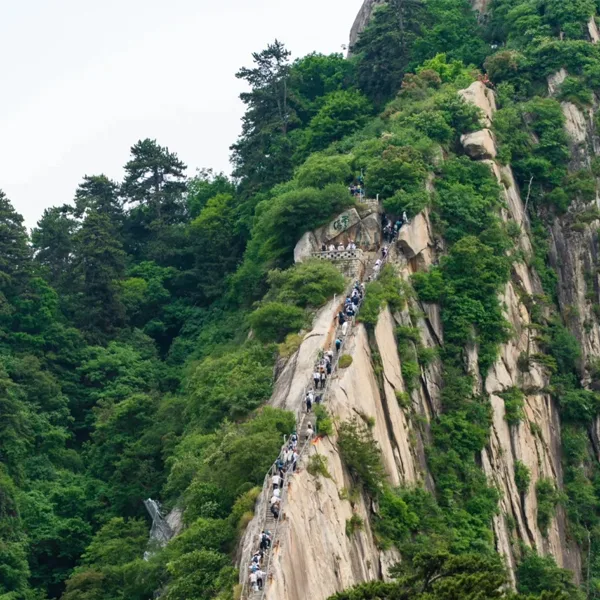
Cableway route selection:
West Peak Up, North Peak Down: The most classic route. The West Peak cable car is the longest and offers the most magnificent scenery, while the North Peak cable car takes you down. After visiting the South, West, East, and Central Peaks, descend from the North Peak. Suitable for those with moderate physical fitness who want to see the most of the main peaks.
West Peak Up, West Peak Down: The easiest route. The cable car takes you to and from the West Peak, and you visit the South and West Peaks before returning via the same route. Suitable for those with limited physical fitness and time.
North Peak Up, North Peak Down: The most economical route. The cable car takes you to and from the North Peak, and you visit the North Peak and its surrounding area. Suitable for those with a limited budget or time.
Mount Hua is not a mountain you can "just stroll around." The scenic area is vast, and you need to walk between the main peaks. Even with the cable car, visiting the main peaks usually takes 4-6 hours of walking. Please assess your physical condition carefully.
Why does hiring a car save time?
Mount Hua is one of the most cost-effective routes for hiring a car in this guide, for the following reasons:
Public Transportation: From Xi'an city center, take the subway to Xi'an North Railway Station → take the high-speed train to Huashan North Railway Station (approximately 30 minutes) → after exiting the station, take a bus or taxi to the Huashan Visitor Center (approximately 15–20 minutes) → transfer to the scenic area bus to the cable car station. The return trip is the same in reverse. The entire journey requires multiple ticket purchases, multiple waiting times, and multiple transfers.
Hired Car: Direct departure from the hotel, approximately 1 hour and 30 minutes one way.
Recommended trips: Huashan Private Tour from Xi'an with Driver
4. Chongqing → Wulong
Wulong is one of the most worthwhile natural scenic spots around Chongqing, and a filming location for many movies (including Transformers and Curse of the Golden Flower). The Three Natural Bridges (three natural stone bridges), Longshuixia Gorge (a deep, fissured canyon), and Fairy Mountain (alpine meadow) here form a typical karst landform wonder. For tourists who enjoy natural scenery, geological wonders, and movie locations, Wulong is a top choice for a day trip to Chongqing.
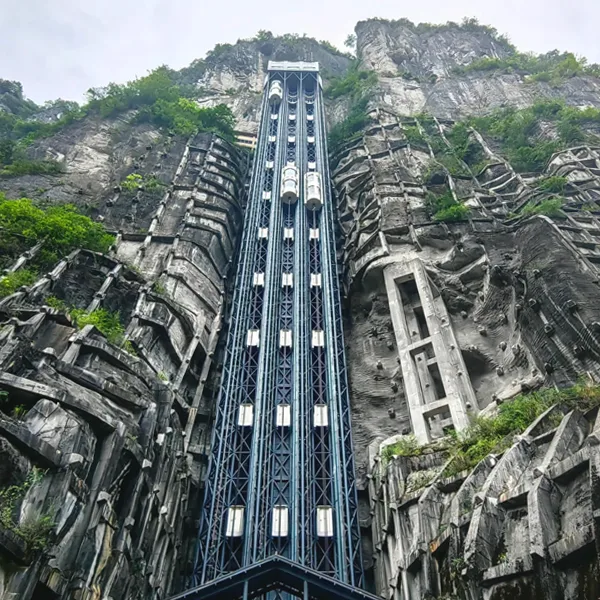
Recommended Day Trip Attractions Priority:
First Priority (Must-See): Three Natural Bridges. This is Wulong's most representative attraction, featuring three spectacular and unique natural stone bridges. The tour route is well-established, taking approximately 2–2.5 hours.
Second Choice (If Time Allows):
Longshuixia Gorge: A deep, underground canyon fissure, profound and awe-inspiring, taking approximately 1.5–2 hours.
Fairy Mountain: Alpine meadow scenery, suitable for those who enjoy expansive views and easy hiking. Highly seasonal—cool and pleasant in summer, may have snow in winter, other seasons offer a less impressive experience.
Chongqing's urban area is hot in summer, while the Wulong Mountain area is cool, making it a great place to escape the heat. In winter, there may be ice and snow, and some scenic areas may have slippery roads; please check the weather forecast before traveling.
Why can hiring a car save time?
Wulong is about 180 kilometers from downtown Chongqing, a 2.5-hour drive (one way). A round trip of up to 5 hours in a day puts a lot of pressure on your time.
Public Transportation Option: From Chongqing (hotel to train station), take the train to Wulong Station (approximately 1-2 hours) → After exiting the station, transfer to a bus or taxi to the Three Natural Bridges Scenic Area (approximately 30-40 minutes) → After the tour, return to Wulong Station to take the train back to Chongqing. This involves multiple transfers and unpredictable travel times; a slight mishap could cause you to miss your return train.
Chartered Car Option: The car departs directly from your hotel to the Three Natural Bridges parking lot. After the tour, you board the car to proceed to the next attraction, and finally, it takes you directly back to your Chongqing hotel. You only need to focus on sightseeing; the driver will handle navigation and waiting.
Recommended trips: Tian Sheng San Qiao Tour Chongqing to Wulong
5. Guilin → Longji Rice Terraces
The Longji Rice Terraces are one of the most classic day trip destinations around Guilin, offering a striking contrast to the karst landscape of Guilin city. Layer upon layer of terraces wind from the foot of the mountain to the summit, dotted with ethnic minority villages (Zhuang and Yao). Each season offers a different view: spring brings mirror-like water, summer brings rolling green waves, autumn brings golden splendor, and winter transforms the landscape into a silver wonderland.
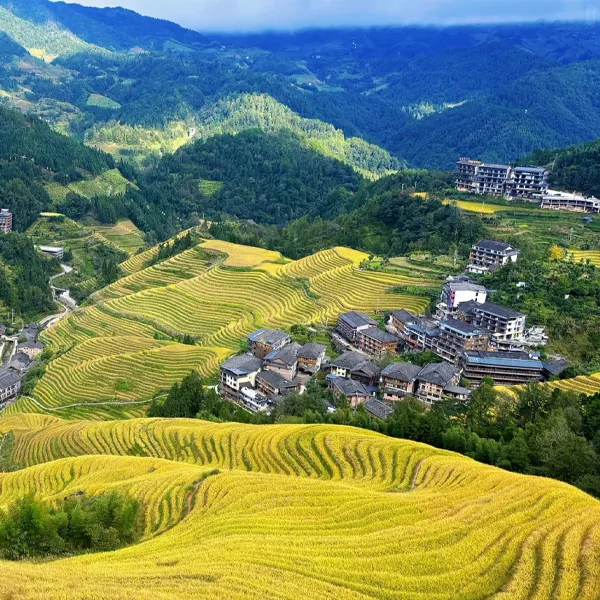
Region selection suggestions:
Ping'an Village (Ping'an Zhuang Village): The most mature and classic terraced field landscape area, featuring the "Nine Dragons and Five Tigers" and "Seven Stars Accompanying the Moon" viewing platforms. Suitable for tourists with limited time; a relatively relaxed visit.
Jinkeng Village (Jinkeng Red Yao Terraces): Larger and more spectacular, with a cable car available; the terraced fields cover a vast area. However, it requires more time.
Why can hiring a car save time?
The Longji Rice Terraces are about 80-100 kilometers from Guilin city, and the route includes a lot of mountain roads (winding mountain roads with many bends and slow speeds).
The best time to visit the Longji Rice Terraces is during the spring irrigation period (May–June, when the terraces appear mirror-like) and the autumn harvest period (late September–mid October, when the rice fields turn golden).
Recommended trips: Guilin Longji Tour - Private Rice Terraces Day Trip
6. Shanghai → Zhujiajiao, Tongli, Nanxun
Shanghai is surrounded by China's most classic ancient water towns in the south of the Yangtze River.
Zhujiajiao is the closest water town to Shanghai (about 50 minutes’ drive), famous for its small bridges and flowing water and the streets of the Ming and Qing Dynasties;
Tongli is famous for the "Venice of the East" and the exquisite Tuisi Garden (a world cultural heritage);
Nanxun is unique for its wealthy mansions that combine Chinese and Western styles and its tranquil atmosphere, and some areas are open to the public free of charge.
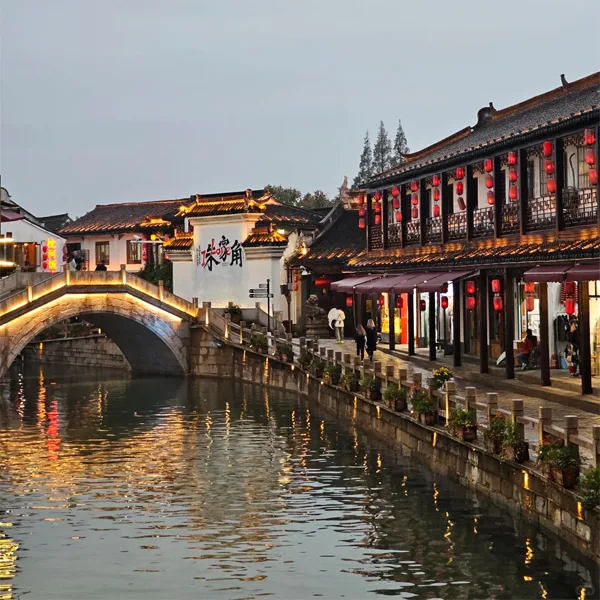
(Zhujiajiao)
Why does hiring a car save time?
In water towns, the entrance, parking area, boat dock, and old street are usually not in the same location. Chartering a car can take you directly to the appropriate entrance and ensure a smooth return trip after your visit, which is especially suitable for tourists with luggage or those who want to continue their journey to Suzhou or Hangzhou.
Recommended trips:Zhouzhuang Tour from Shanghai - Private Full-Day Car
7. Chengdu → Leshan Giant Buddha
The Leshan Giant Buddha is one of the most awe-inspiring stone carvings in China and a UNESCO World Heritage Site, recognized for both its cultural and natural significance. This 71-meter-tall seated Maitreya Buddha statue was carved during the Tang Dynasty and took 90 years to complete. It has stood for over 1200 years.
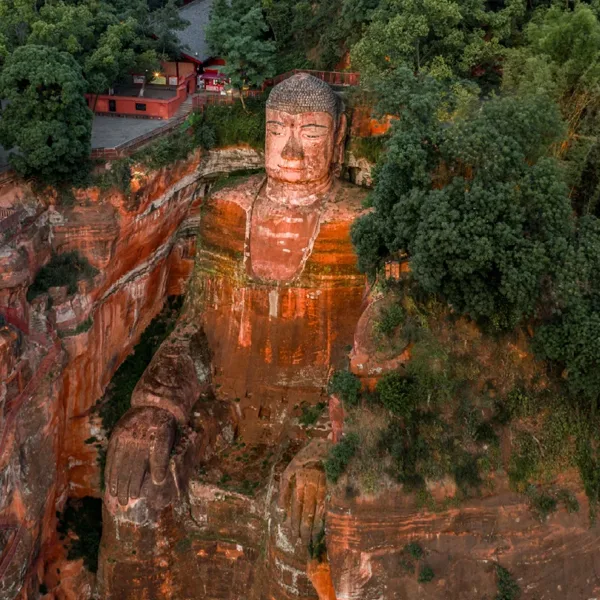
Two ways to experience Leshan Giant Buddha:
Hiking Option: Enter the scenic area from the North Gate, descend the winding plank road to the Buddha's feet, and admire the entire Buddha from above. Approximately 3-4 hours. Suitable for those with good physical fitness who want to experience the details of the Buddha and the historical atmosphere up close.
River Cruise: Board the boat at Wuyou Temple Wharf for a panoramic view of the Buddha from the river. Approximately 30-40 minutes. Suitable for seniors, children, those with limited physical strength, and those who want to take photos of the Buddha from a distance.
Why can hiring a car save time?
While public transportation from Chengdu to the Leshan Giant Buddha seems convenient, the actual costs associated with transfers and waiting are quite high.
High-speed rail option: Take the high-speed train from Chengdu East/South Station to Leshan Station (approximately 50 minutes) → After exiting the station, take a taxi for about 15–20 minutes to the scenic area, or take a bus (approximately 30–40 minutes). The round trip requires two station entry/exit procedures, security checks, waiting for the train, and two taxi rides, which is even more complicated if you have luggage.
Charter car option: Direct bus ride from your Chengdu hotel to the Leshan Giant Buddha Scenic Area parking lot, approximately 2 hours in total. You can board and leave immediately after your visit; no need to rush to catch a high-speed train or transfer with luggage.
Recommended trips:Leshan Giant Buddha Tour from Chengdu with Suji Town
8. Huangshan → Hongcun + Xidi
Hongcun and Xidi are the most famous and best-preserved Hui-style ancient villages in Anhui Province, both of which are World Heritage Sites. The black-tiled and white-walled Hui-style architecture, exquisite wood and stone carvings, tranquil waterways, and pastoral environment make them a paradise for ancient architecture enthusiasts, photographers, and cultural travelers.
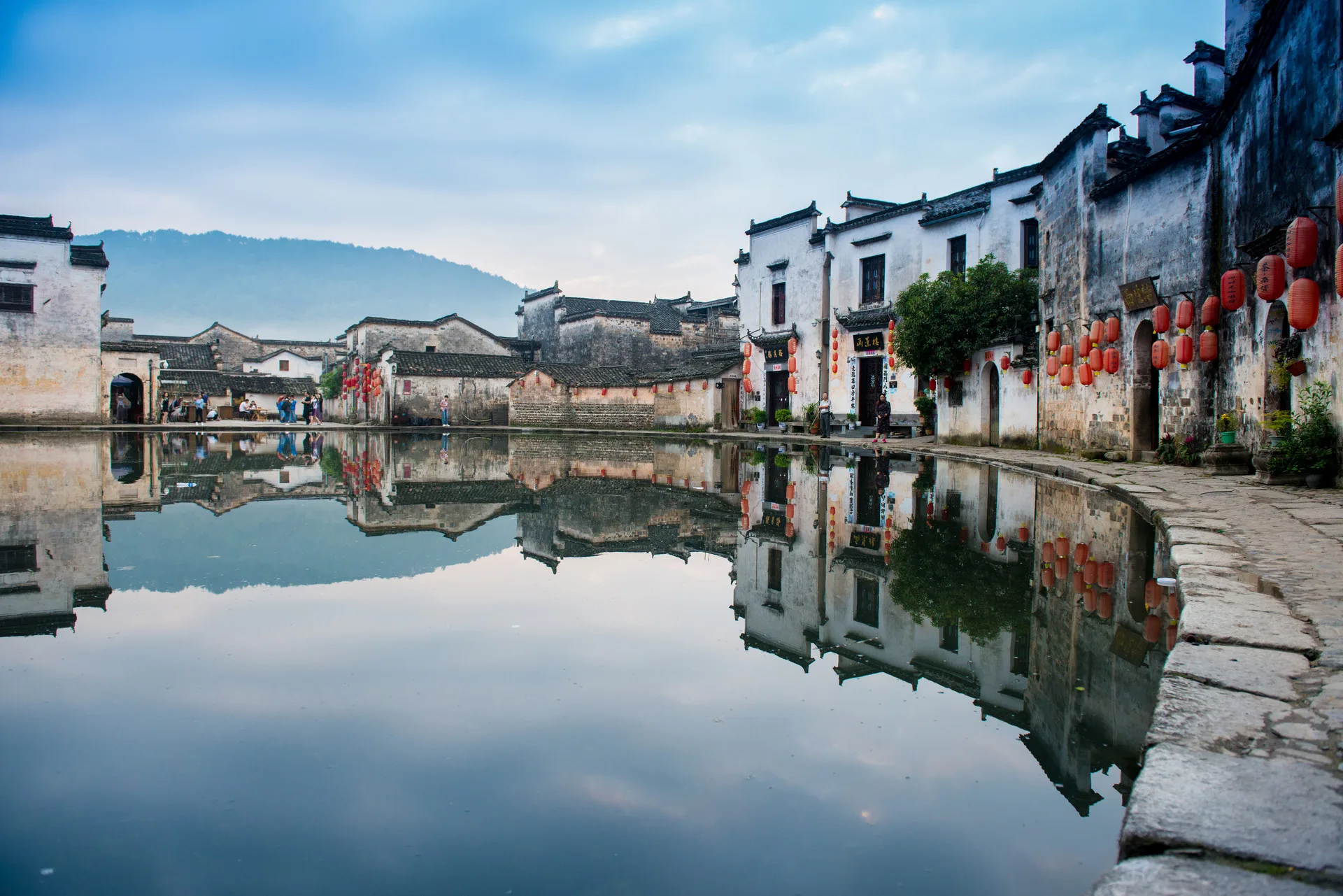
A comparison of the two villages:
Hongcun: The exquisite water system design ("ox-shaped" waterway), the reflection in South Lake, and Moon Pond. Suitable for photography enthusiasts and first-time visitors.
Xidi: A more complete ancient architectural complex, archways, and a more tranquil atmosphere. Suitable for architecture enthusiasts and those wanting to avoid the crowds of Hongcun.
Why can hiring a car save time?
Hongcun and Xidi are about 50-60 kilometers from Huangshan North High-speed Railway Station, and even further from Huangshan city (about 70 kilometers).
Public Transportation Option: Take a tourist bus from Huangshan North Station to Hongcun (approximately 1 hour, limited service) → From Hongcun to Xidi, you will need to transfer or take a taxi (approximately 15-20 minutes by car, but bus service is infrequent) → After your visit, take a bus back to Huangshan North Station. If you are carrying luggage, the entire transfer process will be very inconvenient.
Chartered car option: Pick-up from Huangshan North Railway Station → Directly to Hongcun (luggage left in the car) → Hongcun tour → Transfer to Xidi → Xidi tour → Return to Huangshan North Railway Station or your hotel in Huangshan city. The entire trip is handled by the driver, so you only need to focus on enjoying the scenery and taking photos.
9. Guangzhou → Kaiping Diaolou (Day Trip)
Kaiping Diaolou (watchtowers) are a unique World Cultural Heritage site in Guangdong Province, and a relatively niche yet culturally significant day trip destination for foreign tourists in China. These watchtowers are multi-story tower-like structures built in the early 20th century by overseas Chinese returning to their hometowns, blending Chinese, Western European, and Southeast Asian architectural styles.
Why does hiring a car save time?
Public Transportation Option: Take the high-speed train from Guangzhou to Kaiping South Station (approx. 1 hour) → After exiting the station, take a taxi or bus to Zili Village (approx. 30 minutes) → From Zili Village to Li Garden, take another taxi (approx. 20 minutes) → If you also want to visit Chikan Ancient Town, you'll need to transfer again → Afterwards, return to Kaiping South Station to take the high-speed train back to Guangzhou. This involves multiple transfers and waiting times, and taxis are not as plentiful in rural Kaiping as they are in the city.
Private Car Option: Direct transfer from your Guangzhou city hotel to the Zili Village parking lot → After visiting, board the car to Li Garden → Then proceed to Chikan Ancient Town → Return to Guangzhou via the highway. All points are seamlessly connected, eliminating the need to consider taxis and transfers.
10. Dali → Erhai Lake Loop
Erhai Lake is not a single, isolated scenic spot, but rather a complete loop route around the lake. The loop is approximately 120 kilometers long, with numerous stops along the way, including Dali Ancient City, Longkan Wharf, Panxi Village S-bend, Xizhou Ancient Town, Shuanglang Ancient Town, Xiaoputuo, and Wenbi Village.

Lakeside Route Options:
Western Route (Dali Old Town → Xizhou → Shuanglang): Lake views + rural scenery + ancient towns, focusing on cultural and pastoral landscapes, suitable for a leisurely tour, approximately half a day.
Eastern Route (Shuanglang → Xiaoputuo → Wenbi Village → Dali Old Town): The road runs alongside the lake, offering expansive views, mainly featuring natural lake scenery and expansive mountain views, suitable for an afternoon tour.
Why can chartering a car save time?
The locations along Erhai Lake are scattered, and there is no efficient public transportation system connecting all the stops.
Public Transportation/Cycling Options: Cycling around Erhai Lake requires a full day (approximately 6-8 hours), demanding significant physical and time commitment. Taking a taxi requires booking individually at each point, resulting in long wait times and high costs. Public transportation (buses) has limited coverage and infrequent service.
Chartered Car Options: Drivers are familiar with the route and photo spots, and will park in the best locations. You can adjust the schedule according to the weather and your mood—for example, spending more time on the eastern shore in good weather and focusing on the ancient towns in average weather. A comfortable day trip around the lake is possible, covering 4-5 key stops.
In what situations is it not necessary to charter a car?
Not all day trips in China require a chartered car. In the following situations, using the subway, walking, taxi, or high-speed rail might be more suitable:
Beijing: Forbidden City, Temple of Heaven, Nanluoguxiang, Jingshan Park
Shanghai: The Bund, Lujiazui, Yu Garden, French Concession
Xi'an: City Wall, Bell Tower, Drum Tower, Big Wild Goose Pagoda
Chengdu: Kuanzhai Alley, People's Park, Chunxi Road
Hangzhou: West Lake core area
Suzhou: Gardens, Pingjiang Road, Shantang Street
The criterion is simple: if the attraction is in the city center, parking is inconvenient, and the subway or walking is faster, then there is no need to hire a car.
Practical advice for travelers
1. Book in Advance
During holidays, summer vacation, and Golden Week, charter vehicle resources are in high demand, so it is recommended to book several days in advance. Driver and vehicle information will usually be provided one day before departure after booking confirmation.
2. Confirm Inclusions
When booking, confirm whether the price includes: vehicle, driver service, fuel, tolls, parking fees, and driver's meals. Entrance fees, guided tours, and child safety seats are usually not included.
3. Language of Communication
Some platforms offer English-speaking tour guide services. If you have language requirements, please specify this when booking.
4. Overtime Fees
Chartered vehicles typically have a fixed service duration (8-10 hours). Overtime will be charged hourly.
5. Vehicle Selection
Choose a vehicle type based on the number of passengers and luggage. A 5-seater vehicle is suitable for 3 people + a small amount of luggage, while a 7-seater vehicle is suitable for 6 people + 4 pieces of 28-inch suitcases. Children and infants are counted as passengers; vehicles must not be overloaded.
Frequently Asked Questions
Why is a private car better for some China day trips?
A private car is better when the route involves multiple transfers, long waits, or extra last-mile transport after trains or subways. For day trips, it can save more than 1 hour each way and lets you leave directly from your hotel on your own schedule.
How long does it take to get from Beijing to Mutianyu Great Wall by private car?
A private car from central Beijing to Mutianyu usually takes about 1.5 hours one way. Public transport typically takes around 2 to 2.5 hours one way because it involves a subway ride, a transfer to a bus hub, waiting time, and then a longer bus journey.
Is Mutianyu a better choice than Badaling for first-time visitors?
Yes, Mutianyu is often the better choice for first-time visitors because it is generally less crowded than Badaling while still having strong visitor facilities. It also offers cable cars and a toboggan run, and the wall is well maintained while keeping much of its original character.
Can I visit the Terracotta Warriors and Huaqing Palace in one day from Xi'an?
Yes, these two sites are commonly combined into one Xi'an day trip because they are in the same general area east of the city. A private car makes the day smoother by reducing transfers and giving you more control over timing between the two stops.
When should I choose public transport instead of hiring a car?
Public transport is a reasonable option if your budget is very tight and you do not mind longer travel times or extra transfers. If your priority is an easy, efficient day trip with flexible return timing, a private car is usually the more practical choice.
More to Read

Plan Your Trip
Let us design your perfect China journey
Our trip designers respond within 24 hours with a personalized itinerary and quote.